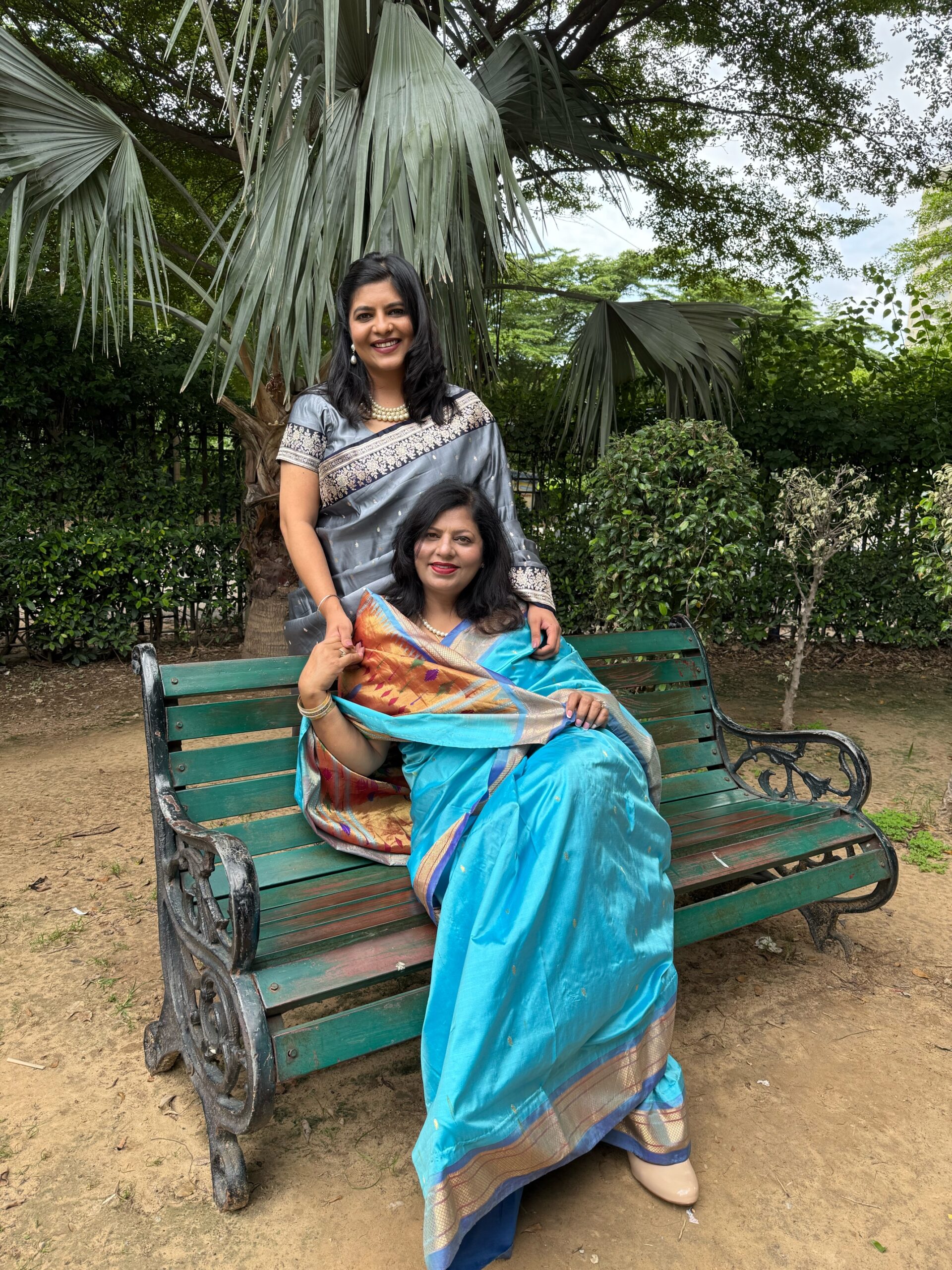
The Psychology of Clothing: Why We Hold Onto What We Wear
Fashion transcends mere adornment, for me it was always memory made tangible. Somewhere maybe that is why RUSHU is about being passed down.
Each garment, especially handwoven sarees, becomes an intimate storyteller holding fragments of our identity, heritage, and the version of ourselves we cherished when we first wore them.
Psychological research confirms what generations of women already know intuitively: clothing anchors memory. Our garments serve as personal archives, where sensory details, the familiar grain of an artisan-woven fabric, the softened edge of a pallu, the faint scent that refuses to fade -deepen our emotional bond with cloth. A single weave can carry decades of love, loss, strength, and belonging.
This emotional connection transforms ordinary fabric into something sacred. When you reach for your heirloom saree, you’re not simply adorning your body. You’re wearing an inheritance of poise, decisions, and presence – a lineage of womanhood you continue in your own way.
Living Heirlooms: The Banarasi Saree as Generational Legacy
The tradition of preserving heirloom sarees echoes practices of royal families across India, who have safeguarded these textiles as emblems of lineage and legacy for centuries. A mother’s saree is never just an outfit; it is continuity. It is resilience handed down. It is grace passed from one generation of women to the next.
This intergenerational bond represents something increasingly rare in modern fashion: the deliberate creation of pieces designed not for a single season, but for a lifetime—and beyond.
When creating Rushu, the vision was to honor this sacred connection. Each handwoven Banarasi silk saree is crafted with deliberate slowness:
- Hours of meticulous weaving by master weavers from Varanasi
- Natural dyeing processes that respect textile integrity
- Hand-finished details that improve with age
- Sustainable construction designed for durability across decades
These aren’t garments to merely wear. These are pieces to inherit, to protect, and to pass on—living heirlooms embedded with intention from the moment the weaver’s hands first touched the loom.
Memory, Identity, and the Sacred Thread: Understanding Why Sarees Matter
The influence of those who shaped our sensibilities stays with us in subtle ways. For us at Rushu, that quiet presence guides everything we create—a kind of early warmth that shaped our taste, sensitivity, and reverence for craft. Each piece carries a whisper of that tenderness, created with a memory of softness, hoping it offers the same comfort to the person who wears it.
What Research Says About Heirloom Clothing and Emotional Well-Being
Studies in environmental psychology and consumer behavior reveal that inherited or intentionally preserved garments:
- Reduce psychological stress by providing continuity and rootedness in an ever-changing world
- Strengthen family bonds through the stories attached to each piece
- Build resilience by reminding us that some relationships and fabrics are worth holding close
- Combat disposability by choosing mindfulness over trend cycles
When we embrace heirloom garments, we participate in a conscious tradition—one that celebrates family, artistry, and endurance.
The Slow Fashion Revolution: Why Sustainability and Memory Intersect
In a world where fashion is often treated as disposable, choosing to cherish and preserve your clothes becomes a gentle defiance. To re-wear, to repair, to select pieces that age beautifully—these are mindful acts that honor:
- The artisans who spent countless hours creating them
- The stories that slowly settle into their threads
- The weavers of Banaras who practice centuries-old craft
- Future generations who will inherit these pieces
Handloom sarees represent the opposite of fast fashion. They embody:
- Craftsmanship that cannot be rushed or replicated by machines
- Sustainability through natural fibers and traditional dyeing methods
- Ethical production that supports master weavers and their families
- Timeless design that transcends seasonal trends
- Quality investment that actually increases in value across generations
Every Rushu saree comes with the knowledge that it was created with intention, not for profit margins, but for presence.
The Banarasi Weaver: Honoring the Artisan Behind the Thread
The sarees we create are born from the hands of Banarasi weavers—masters of a craft passed down through generations. These artisans work with:
- Silk threads selected for their luminosity and drape
- Traditional looms that have changed little in centuries
- Meticulous techniques that cannot be automated
- Dedication to creating pieces worthy of inheritance
When you wear a Rushu saree, you wear the story of a weaver’s mastery. You wear hours of focused attention. You wear a commitment to preserving heritage craftsmanship in an industrial world.
Fashion With Meaning: Building Your Personal Archive
Every piece in your wardrobe can become an archive if you treat it as such. Consider:
- What memories does this saree hold? Who was present when you first wore it?
- How has it aged? The subtle changes in fabric tell the story of your life wearing it
- Who will inherit it? What story will you pass down alongside the threads?
- How does it make you feel? Does it anchor you to something meaningful?
This is the philosophy behind Rushu: creating sarees that earn their place in your life through time, not through trends.
The Intergenerational Gift: What You Pass Down With Your Saree
When a mother gives her daughter a saree, she is giving:
- A template for elegance that transcends seasons
- Physical proof that beauty improves with age
- Permission to be traditional without being static
- A tangible symbol of unbroken lineage
- An object that says: “You belong to something larger than yourself”
Heirloom sarees serve as bridges between generations, allowing daughters to understand their mothers, and mothers to see themselves reflected in their daughters’ choices.
Mindful Fashion: The Art of Wearing, Caring, and Preserving
Treating your saree as a living heirloom means:
Wearing with intention: Choose moments worthy of the piece. Let it accumulate memories of celebration, quiet mornings, significant conversations.
Caring with respect: Learn the proper storage methods. Understand which fabrics need protection from moisture, light, and time. These rituals of care are themselves a form of honoring the piece.
Repairing as restoration: When a thread loosens or a seam wears, restoration becomes an act of love, not replacement. Work with skilled artisans who understand the original craft.
Sharing the story: Tell the story of your saree—its weaver, its journey, its significance in your life. Let the next generation know why it matters.
Rushu: Where Heritage Meets Intention
Rushu exists at the intersection of:
- Artisan heritage from the weavers of Varanasi
- Modern consciousness about sustainability and meaning
- Intergenerational connection between mother and daughter
- Luxury that serves a purpose beyond adornment
Every Rushu saree is created with the knowledge that it will outlive trends, survive seasons, and potentially become a cherished family piece passed from one generation to the next.
The Investment in Legacy: Why Heirloom Quality Sarees Matter
Choosing a Rushu saree is not just a fashion purchase—it is an investment in:
- Your personal narrative: You are choosing to wear pieces with intention
- Artisan livelihoods: You are directly supporting master weavers
- Cultural preservation: You are protecting heritage textile traditions
- Generational legacy: You are creating something worth passing down
- Environmental responsibility: You are choosing durability over disposability
When you select a handwoven saree, you participate in an economy of meaning rather than an economy of consumption.
The Final Thought: Some Memories, Some Fabrics, Are Worth Holding Close
In an era of infinite fast fashion choices, the act of selecting a single piece and committing to it becomes radical. It says: “This matters. This is worth my time. This is worth protecting. This is worth passing on.”
Fashion, at its most authentic, is not about staying ahead of trends. It is about staying true to beauty that endures. It is about recognizing that some memories, some relationships, and some fabrics are worth holding close. Worth protecting. Worth passing on.
Your Rushu saree is waiting to become part of your family’s story.